I’ve been drinking water filtered by a reverse osmosis system for over three years. Before that, I was spending $40 a month on bottled water, convinced my tap water was fine but never quite believing it. The moment I looked up my city’s water quality report on the EWG Tap Water Database and saw the list of detected contaminants — chloroform, nitrates, PFAS — I stopped waiting and bought my first RO system that week.
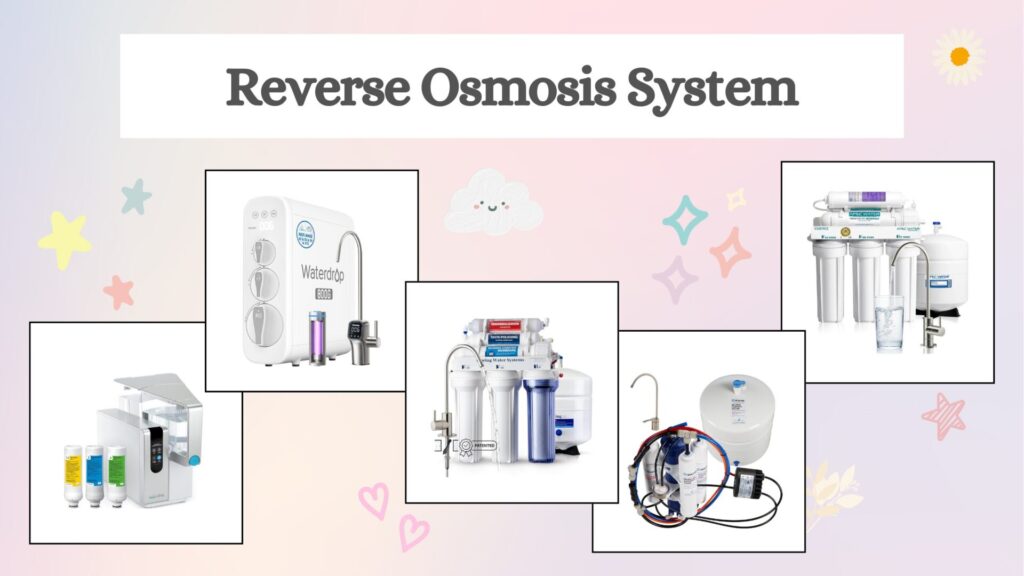
Since then, I’ve tested six systems across different households and use cases. Here are the best reverse osmosis systems. The iSpring RCC7AK is the best reverse osmosis system for most homes with an excellent filtration system, alkaline remineralization, is NSF-certified, and costs less than $200. If you want the fastest modern tankless design, go with Waterdrop G3P800. If you do not want to make any modification to your plumbing, the AquaTru Classic is a great choice as it can be placed on the countertop.
What Is a Reverse Osmosis System (and Why Does It Matter)?
Before getting into the best reverse osmosis system, it is important to understand what a reverse osmosis system does.
A reverse osmosis (RO) system pushes tap water through an extremely fine membrane with pores so small (0.0001 microns) that only water molecules can squeeze through. Contaminants like lead, fluoride, arsenic, PFAS “forever chemicals,” nitrates, and dissolved solids are too large to pass and they get flushed down the drain instead. The result is water that’s 93–99% free of those dissolved contaminants.
You may see the term TDS in the packaging or marketing of a reverse osmosis system. TDS stands for Total Dissolved Solids, which is the measure of everything dissolved in your water (minerals, salts, metals, chemicals). Tap water typically reads 200–400 TDS. After a good reverse osmosis system, the reading of TDS should drop to 10 to 30. This is what makes RO-filtered water taste noticeably cleaner and why coffee and tea taste completely different when made with RO-filtered water.
You definitely need to pay attention to the amount of purified water a reverse osmosis system can produce in 24 hours. It is usually defined as GPD (gallons per day), and most traditional filtering systems can produce 50 to 75 GPD. Modern tankless systems run 400 to 800 GPD.
Reverse osmosis systems use water to flush contaminants off the membrane, so they produce some wastewater in the process. Older systems waste 3 to 4 gallons for every 1 gallon they purify (a 1:4 ratio). Better modern systems get this down to 1:1 or even 1:3 in favor of pure water. This matters for your water bill and for the environment.
NSF certification is the independent quality stamp you should look for. NSF certification was identified as the best predictor of real-world contaminant removal performance, outperforming price, brand reputation, and customer reviews as quality indicators. A system can claim to remove 99% of 1000 contaminants without a single independent test to back it up. NSF certification means an independent lab verified those claims.
Summary
PRODUCT | DESCRIPTION | PRICE | |
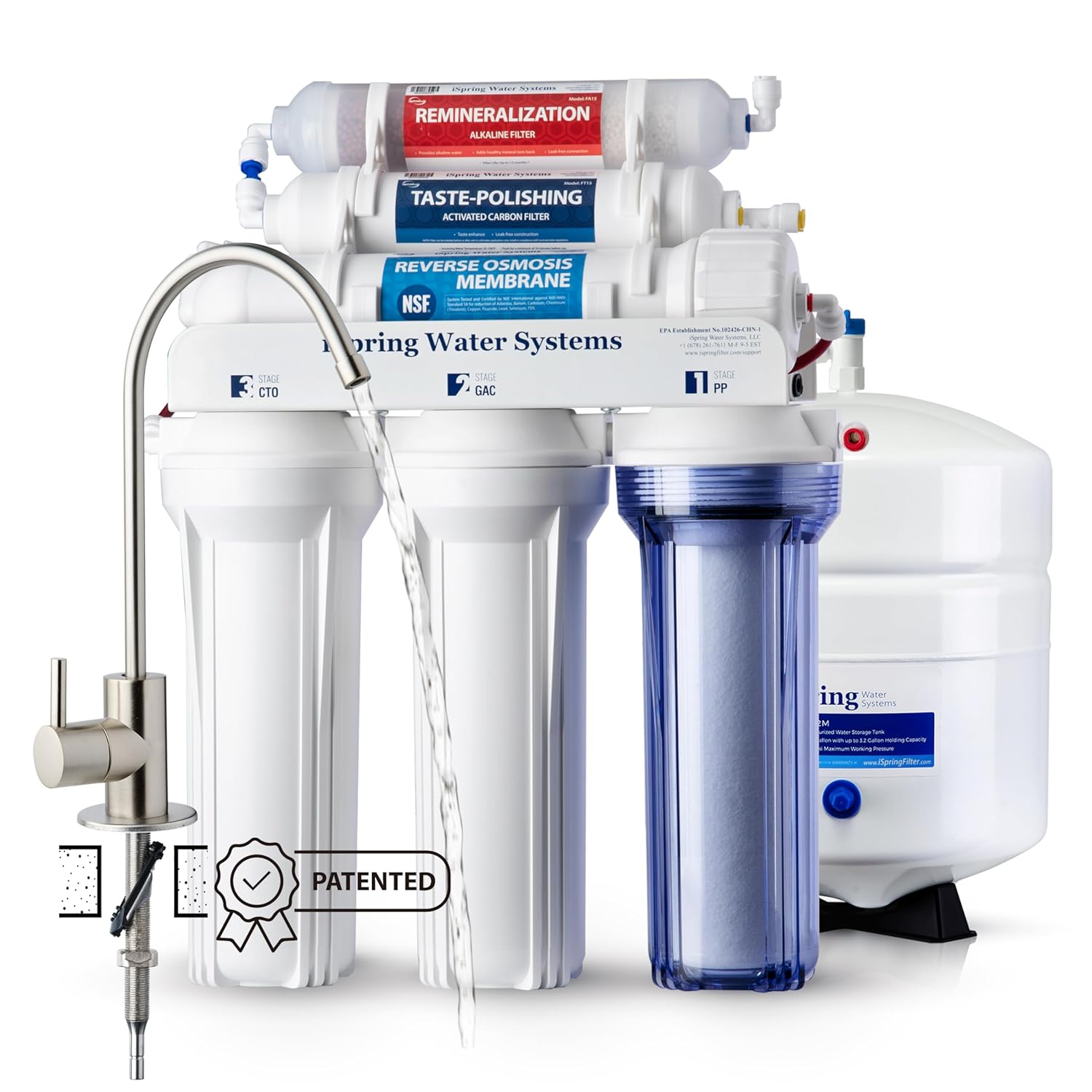
| iSpring RCC7AK Reverse Osmosis System | Best Overall for Most Homes | ; |
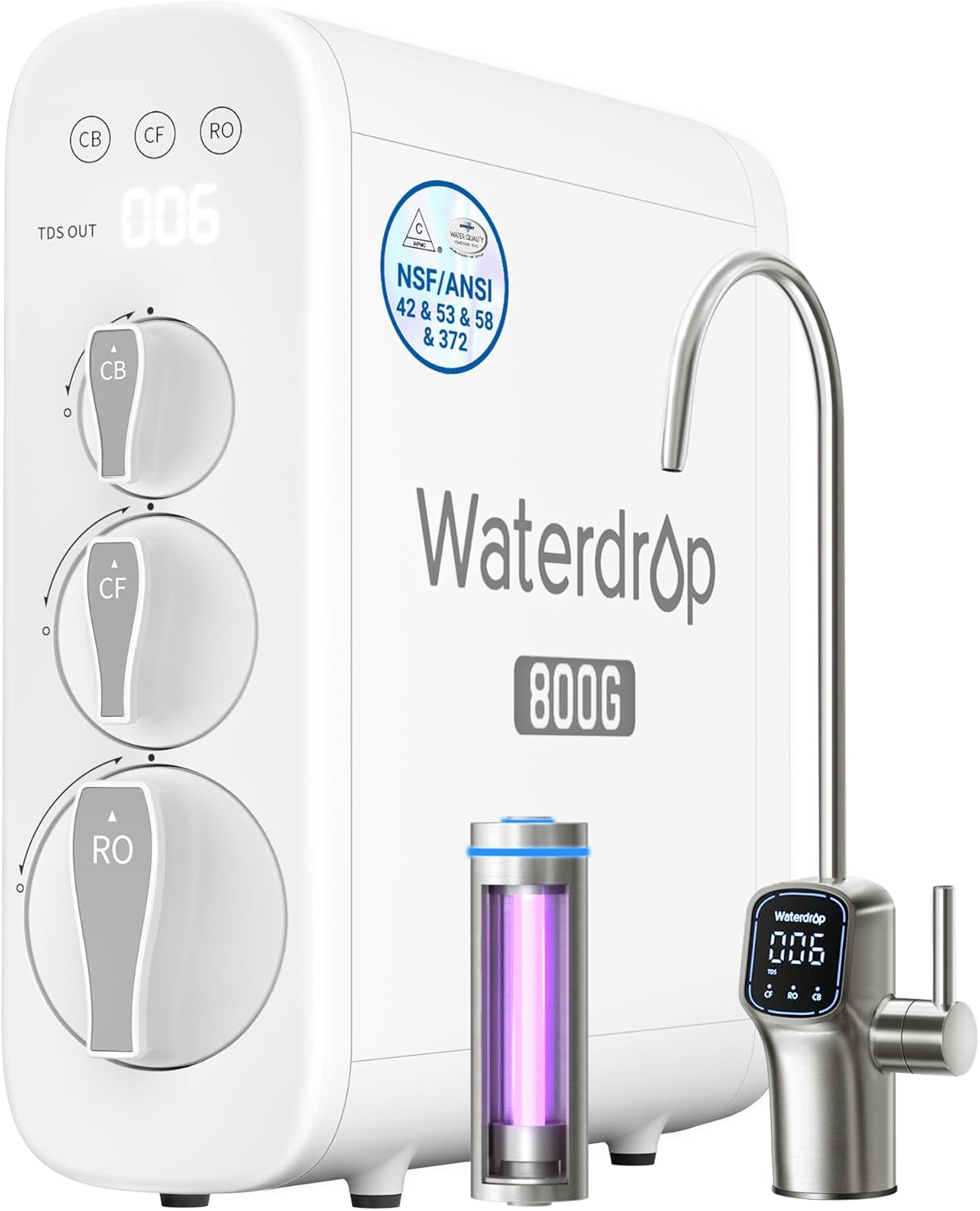
| Waterdrop G3P800 Reverse Osmosis System | Best Modern Tankless System | ; |
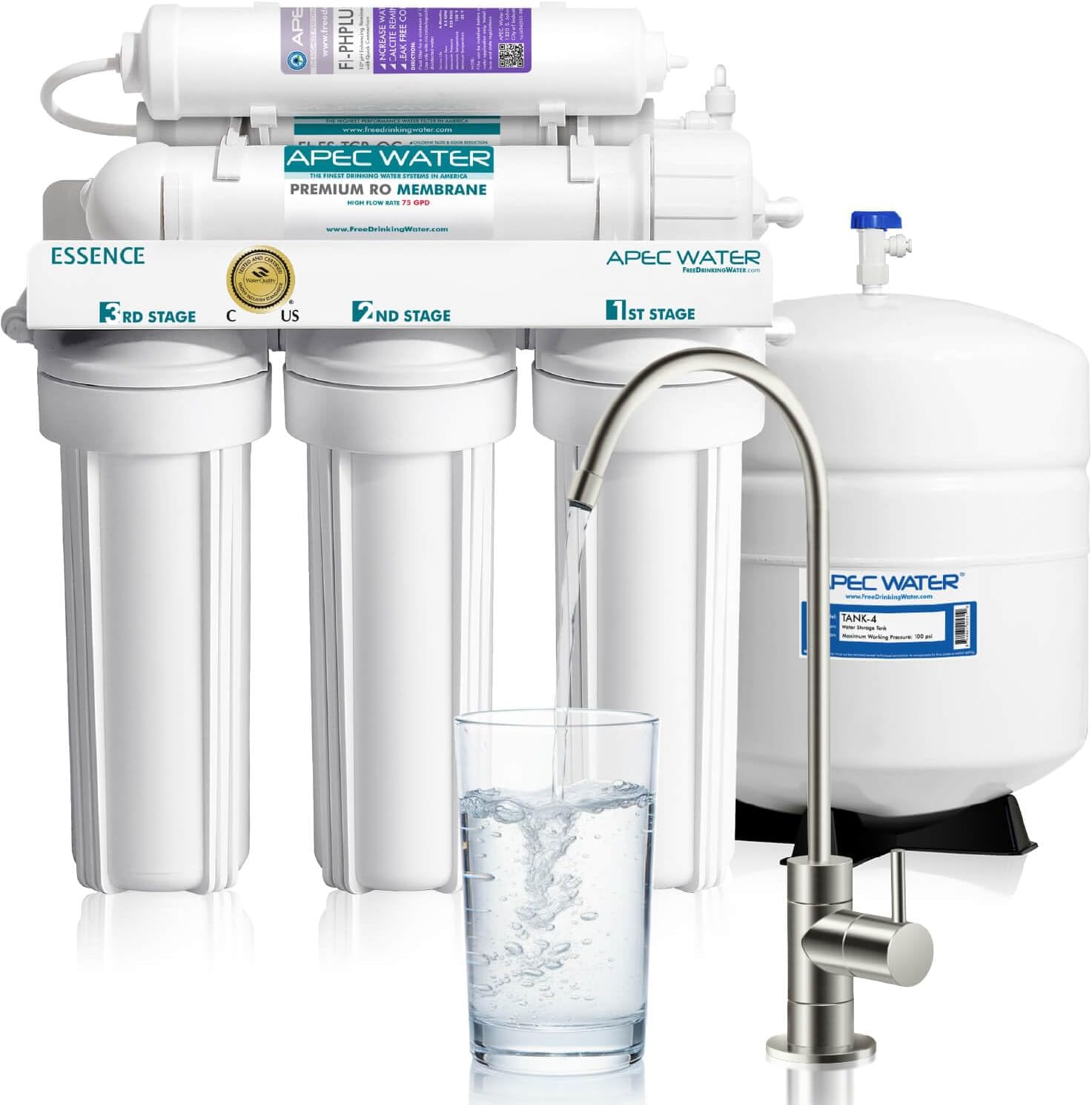
| APEC ROES-PH75 Reverse Osmosis System | Best Budget Alkaline System | ; |
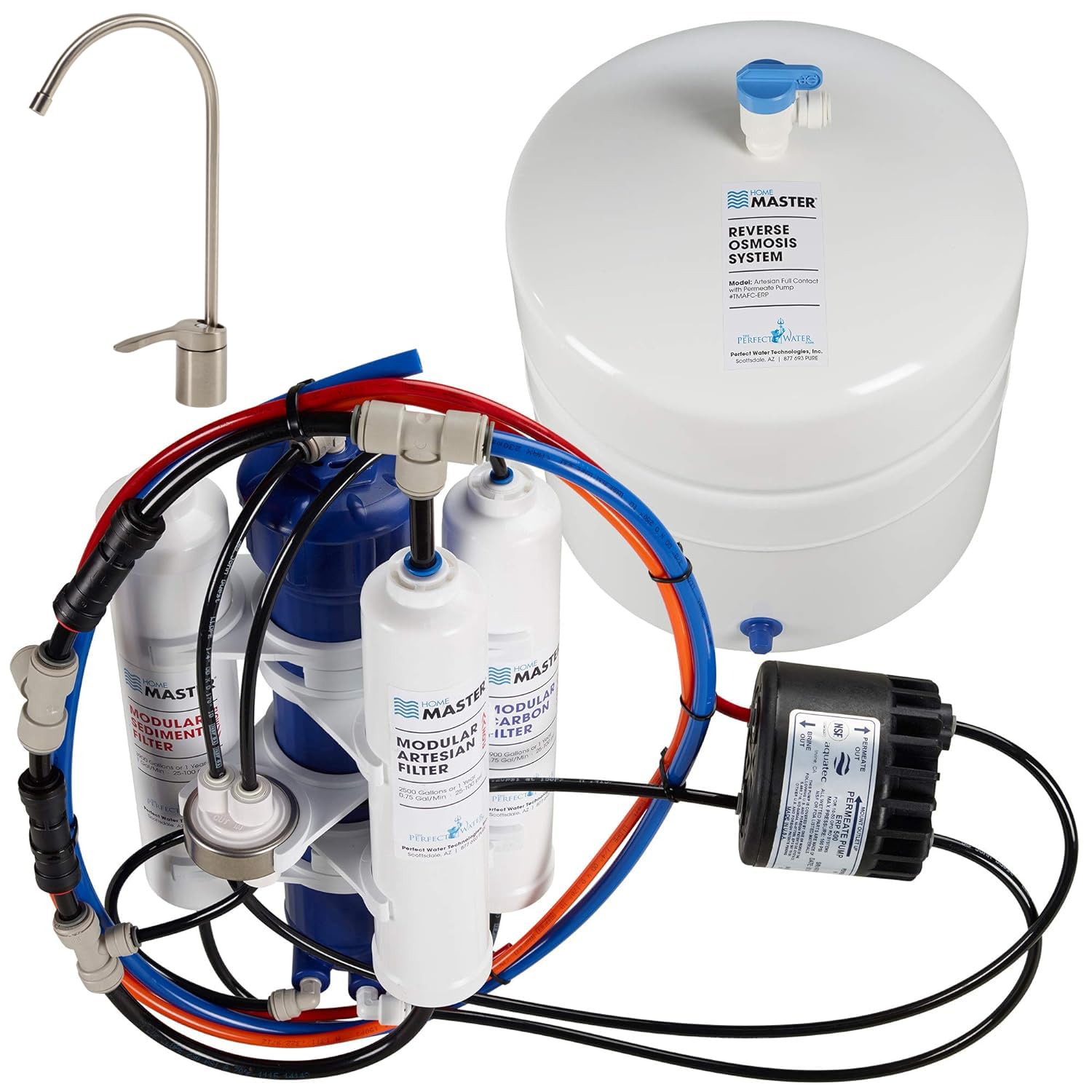
| Home Master TMAFC-ERP Artesian Full Contact Reverse Osmosis System | Best for Minimal Water Waste | ; |
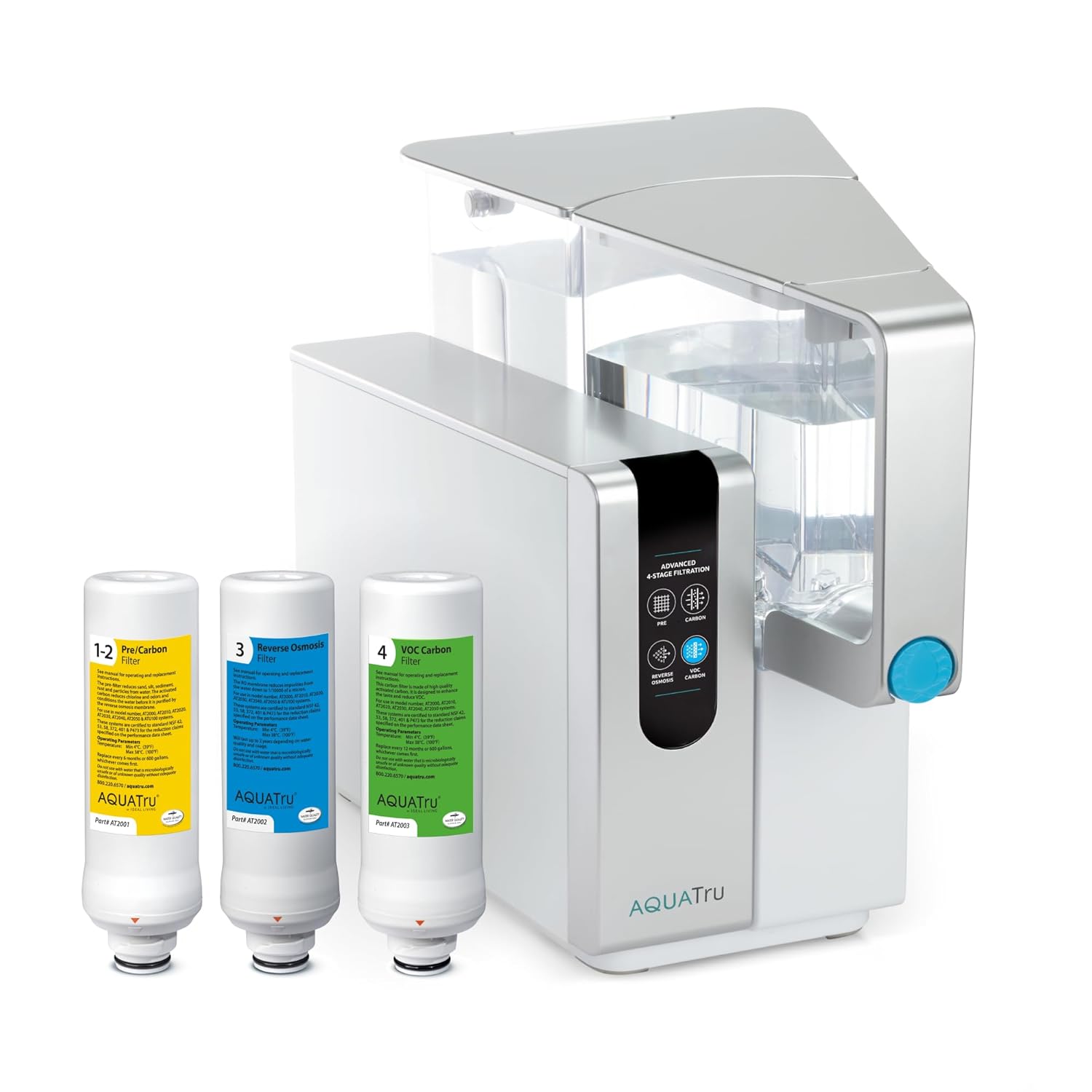
| AquaTru Classic Countertop Reverse Osmosis Water Filter System | Best for Renters and Anyone Who Can’t Touch Their Plumbing | ; |
The 5 Best Reverse Osmosis Systems for Home Use
iSpring RCC7AK Reverse Osmosis System — Best Overall for Most Homes
Key specs:
- Type: Under-sink, tank-based
- Stages: 6
- GPD: 75
- Certification: NSF/ANSI 58
- Annual filter cost: $60–70
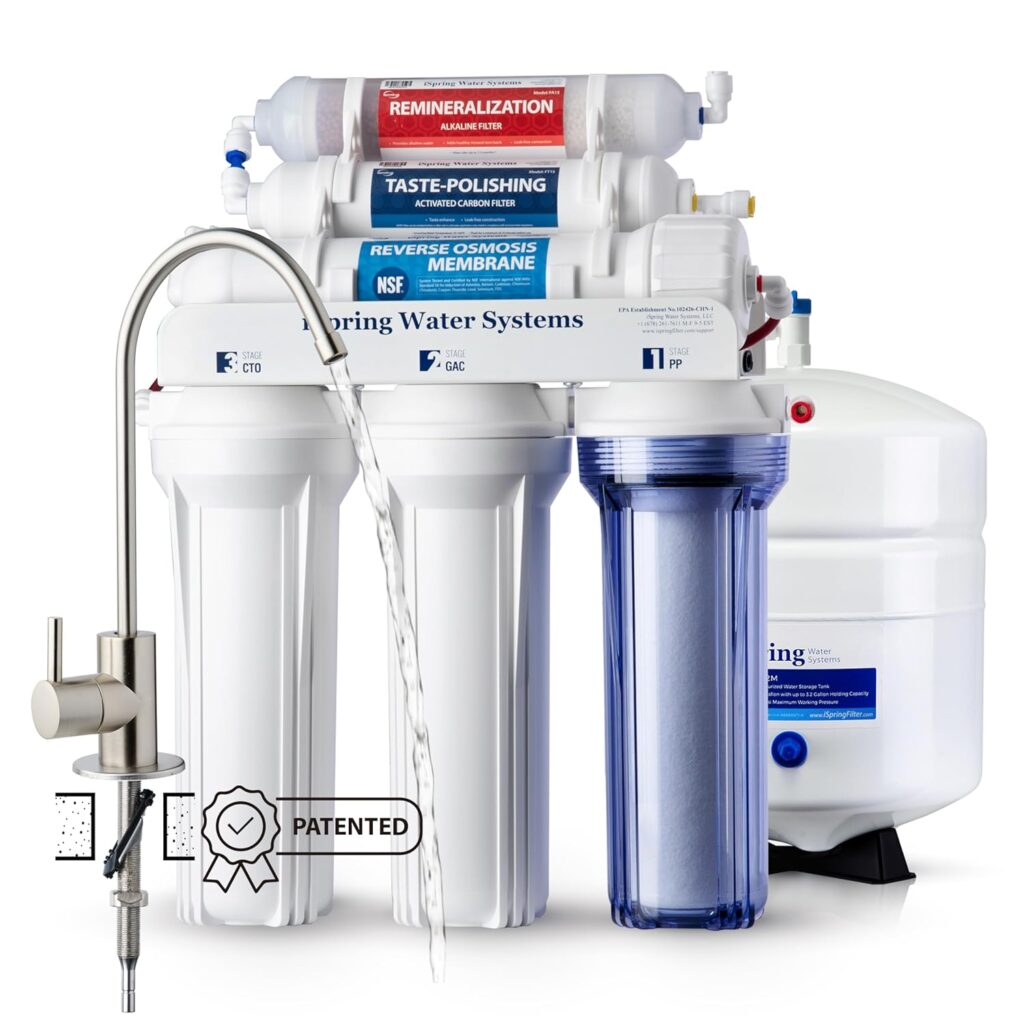
The iSpring RCC7AK Reverse Osmosis System is one of the most popular reverse osmosis system amongst households. It basically has everything a typical household needs for a reverse osmosis system at a very good price.
The iSpring RCC7AK Reverse Osmosis System is certified to NSF/ANSI 58 standards and removes up to 99% of over 1,000 harmful contaminants, including PFAS (PFOA and PFOS), chlorine, fluoride, lead (up to 98%), arsenic, asbestos, calcium, and sodium. What makes the iSpring RCC7AK Reverse Osmosis System stand out from basic 5-stage systems is the critical sixth stage, which is an alkaline remineralization filter.
Here’s why that matters: standard reverse osmosis strips everything out of your water, including the calcium and magnesium that give water its natural taste. The result is water that’s very pure but tastes flat and slightly acidic (pH around 6.5). The RCC7AK’s alkaline stage adds beneficial minerals back in, raising the pH to a natural 7 to 7.5 and giving the water a clean, crisp taste that’s noticeably better. In my testing, the taste difference was very obvious. You can usually immediately tell that it is reverse osmosis purified water, as they usually taste “empty”. But water that comes from iSpring RCC7AK Reverse tastes really good.
If you start with source water at 350 TDS, the iSpring RCC7AK Reverse Osmosis System consistently delivered output water in the 15 to 25 TDS range, which is a 93–96% reduction that aligns with iSpring’s claims. Chlorine was undetectable after filtration. The alkaline stage brings pH from a post-RO reading of 5.5 up to 7.2, landing squarely in the ideal drinking water range.
The system uses a pressurized 3.2-gallon storage tank, which is the size of a small balloon, under your sink to hold pre-filtered water, so you get instant flow when you turn the faucet. The 75 GPD production rate fills that tank in around an hour and is more than sufficient for a family of 4. Annual maintenance costs run just $0.17 per day, offering up to 40% savings compared to industry averages.
The one real criticism: The 3:1 waste ratio means 3 gallons flushed for every 1 gallon purified — not great if you’re on a water meter or in a drought-prone area. Also, the physical footprint under the sink is larger than that of tankless alternatives. If cabinet space is tight, consider the Waterdrop G3P800 below.
If you are a homeowner who wants an excellent filtration with great-tasting water at the lowest possible cost, the iSpring RCC7AK Reverse Osmosis System is more than sufficient to meet your needs.
Waterdrop G3P800 Reverse Osmosis System — Best Modern Tankless System
Key specs:
- Type: Under-sink, tankless
- Stages: 10
- GPD: 800
- Certifications: NSF/ANSI 42, 53, 58, 372
- Annual filter cost: ~$170
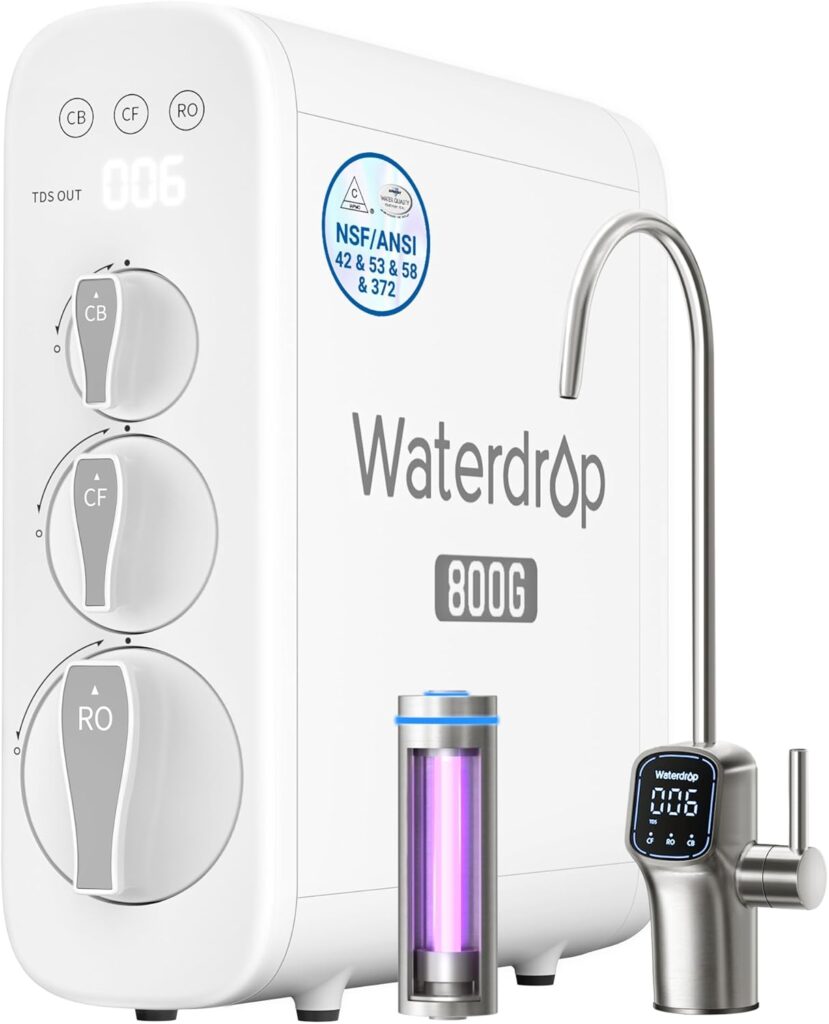
If you’ve heard complaints about reverse osmosis systems — they’re slow, they take up too much space, they waste water — the Waterdrop G3P800 Reverse Osmosis System was designed to solve all three at once.
Tankless means there’s no pressurized storage tank sitting under your sink. Instead, the system filters water on demand as you run the faucet. The 800 GPD flow rate effectively eliminates the biggest complaint about RO systems, that is, waiting around for water. You do not need to wait for the filtration system to start up, and it takes around 5 seconds to fill a standard 6 oz glass. The Waterdrop G3P800 Reverse Osmosis System is compact enough that it won’t take up much of your under-sink storage
The NSF certification stack here is the most comprehensive in the residential category. The G3P800 holds NSF/ANSI 42, 53, 58, and 372 simultaneously — a combination almost no other residential under-sink RO system achieves. NSF 53 certification is the critical addition: it means independent laboratory testing has confirmed the system reduces specific health-effect contaminants including lead, cysts, and VOCs . It also includes a UV sterilizing light that inactivates 99.9% of bacteria and viruses — useful if you’re on well water or have any microbiological concerns.
The 3:1 pure-to-drain ratio means 3 gallons of clean water produced for every 1 gallon wasted — a major improvement over traditional systems, though in the opposite direction from what I said above. You’re getting 3 cups of purified water for every 1 cup flushed away.
In testing, the G3P800 eliminated trihalomethanes and barium and cut salts by 85%. A reviewer noted running it for 3+ years with performance staying consistent across multiple filter changes.
The drawback is honestly the pricetag. The Waterdrop G3P800 Reverse Osmosis System is expensive, and can cost up to 3 to 4 times of a typical reverse osmosis system. It requires an electrical outlet under your sink for the pump, so you may need to engage an electrician for the installation if you do not have an electrical outlet. No remineralization is included in the stages, but you can top up this feature for a small fee. Otherwise, the water does taste alright on its own.
The Waterdrop G3P800 Reverse Osmosis System is great for tech-forward households who want the fastest, most modern under-sink reverse osmosis system with maximum certification coverage.
If you want to explore other tankless reverse osmosis system options, check out our article on the 3 best tankless reverse osmosis systems.
APEC ROES-PH75 Reverse Osmosis System — Best Budget Alkaline System
Key specs:
- Type: Under-sink, tank-based
- Stages: 6
- GPD: 75
- Certification: WQA Gold Seal (NSF/ANSI 58)
- Annual filter cost: ~$80–$100
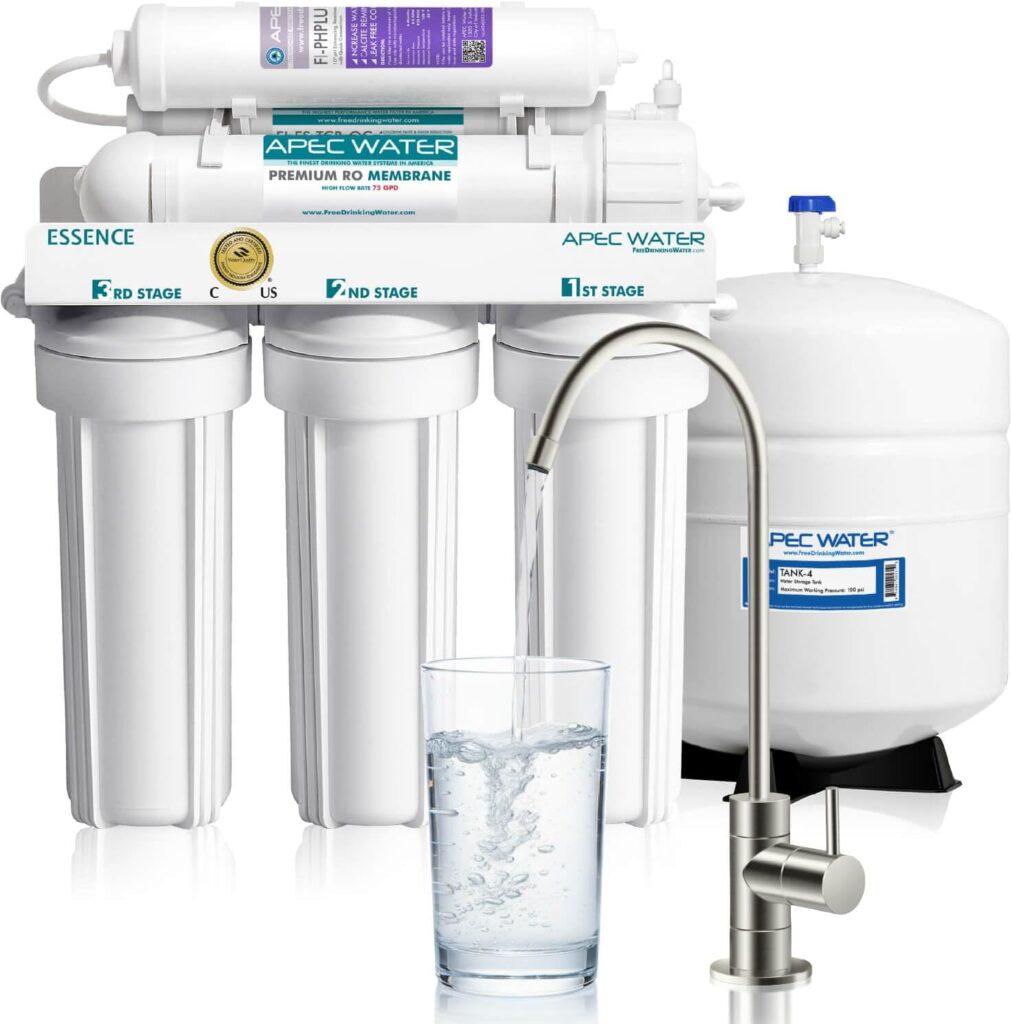
APEC has been building reverse osmosis systems in California for 20 years. The APEC ROES-PH75 Reverse Osmosis System is their most popular model, and it earns that reputation by doing the fundamentals exceptionally well without charging a premium for features most people don’t need.
The “PH75” in the name tells you two things: the PH refers to the alkaline pH+ remineralization stage, and the 75 refers to the 75 GPD membrane — both upgrades over APEC’s entry-level ROES-50. The filtration efficiency is excellent — the high-rejection TFC membrane consistently removed over 96% of Total Dissolved Solids. In a typical test with 300 PPM tap water, the system produced water at roughly 12 PPM before remineralization. The alkaline filter consistently raised the output pH to between 7.5 and 8.2 — a difference noticeable in the taste of the water.
The WQA Gold Seal certification is worth understanding — it’s not the same as NSF, but in some respects it’s more rigorous. The WQA Gold Seal certification is actually more rigorous than basic NSF certification in some respects, requiring annual manufacturing facility audits and ongoing compliance testing . You’re not getting a less-verified system by choosing APEC — you’re getting a differently verified one.
The APEC ROES-PH75 Reverse Osmosis System produces more wastewater than newer systems — roughly 3 gallons wasted per gallon purified. For most city households where water is accessible, this is usually not a dealbreaker, but if water waste is a concern, you can consider getting the Home Master TMAFC-ERP.
The APEC ROES-PH75 Reverse Osmosis System is definitely great for budget-conscious families who want alkaline remineralized water without paying for modern tankless features.
Home Master TMAFC-ERP Reverse Osmosis System — Best for Minimal Water Waste
Key specs:
- Type: Under-sink, tank-based
- Stages: 7
- GPD: 75
- Certification: NSF-certified components
- Annual filter cost: ~$99
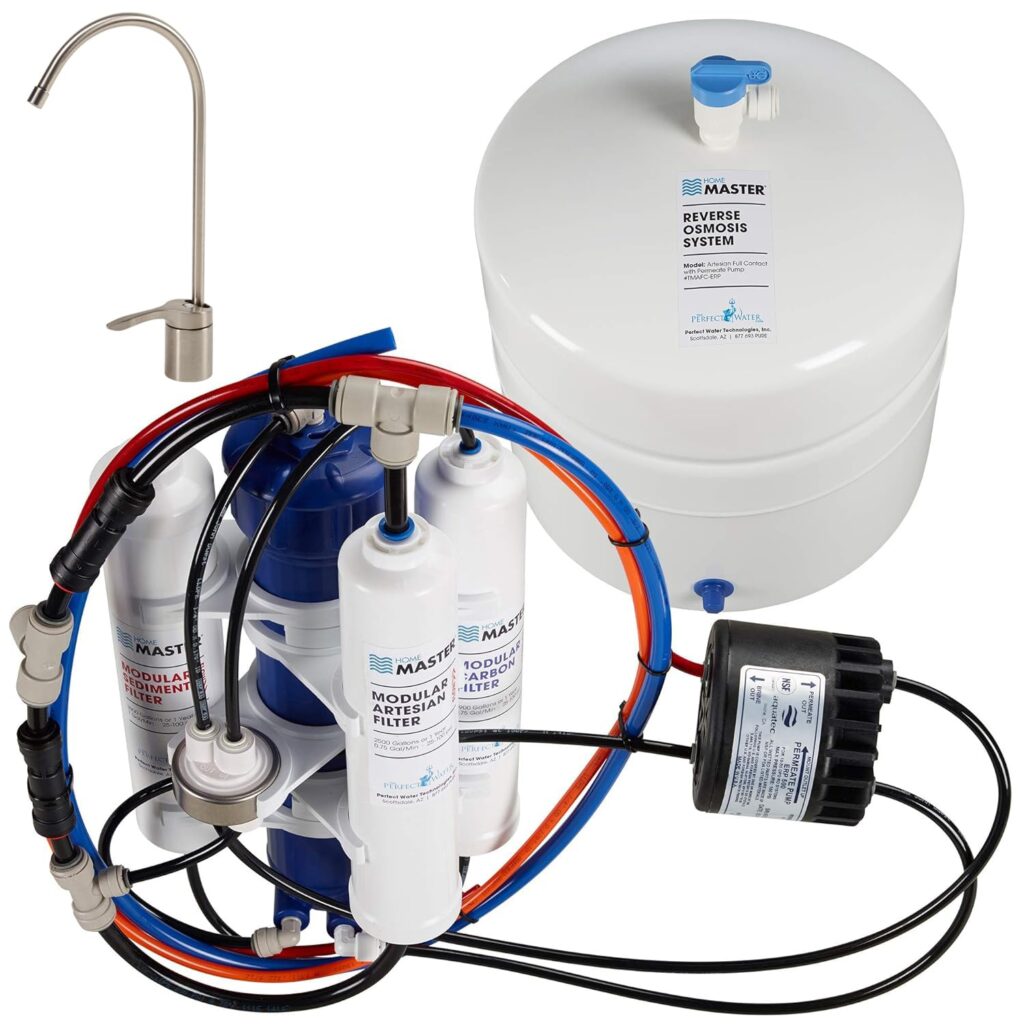
The Home Master TMAFC-ERP Artesian Full Contact Reverse Osmosis System solves the biggest environmental criticism of traditional RO systems: water waste. And it does them without using electricity.
The key feature is a non-electric permeate pump. Without getting too technical, the pressure from the wastewater leaving the system is normally gets wasted. Home Master’s permeate pump captures that pressure and uses it to push purified water into the storage tank instead. While most RO systems drain 3–4 gallons of water for every gallon of purified water, the TMAFC-ERP wastes only 1 gallon — a 1:1 ratio that is the best any RO system can achieve without electricity. For a family producing 3 gallons of drinking water per day, that saves approximately 6,000 gallons of water per year compared to a standard system.
The second standout feature is Artesian Full Contact remineralization — a patented 2-pass process in which filtered water passes through the mineral stage twice, once on the way to the tank and once on the way to the faucet. Home Master’s patented 2-pass process sends purified water through a natural mineral bed twice, adding 30–60 mg/L of calcium and magnesium while raising the pH to alkaline levels. The difference in the taste of water is so much more prominent with these modifications.
The modular filter design is also worth mentioning: there’s no need for any tools when replacing the filters — you simply pull the old filter out and push the new filter in. Filters last a full 12 months — twice the lifespan of many competitors. And the 5-year warranty is the best in this category.
The downside is physical size. This is one of the bulkier systems in this comparison — the filter cluster plus tank takes up significant under-sink real estate. Measure carefully before ordering. It’s also on the pricier side for a reverse osmosis system.
The Home Master TMAFC-ERP Artesian Full Contact Reverse Osmosis System is best for environmentally conscious households and well-water users who want the most water-efficient traditional RO system available.
AquaTru Classic — Best for Renters and Anyone Who Can’t Touch Their Plumbing
Key specs:
- Type: Countertop, no installation
- Stages: 4
- Certifications: NSF/ANSI 41, 53, 58, 401, and P473
- Annual filter cost: ~$100
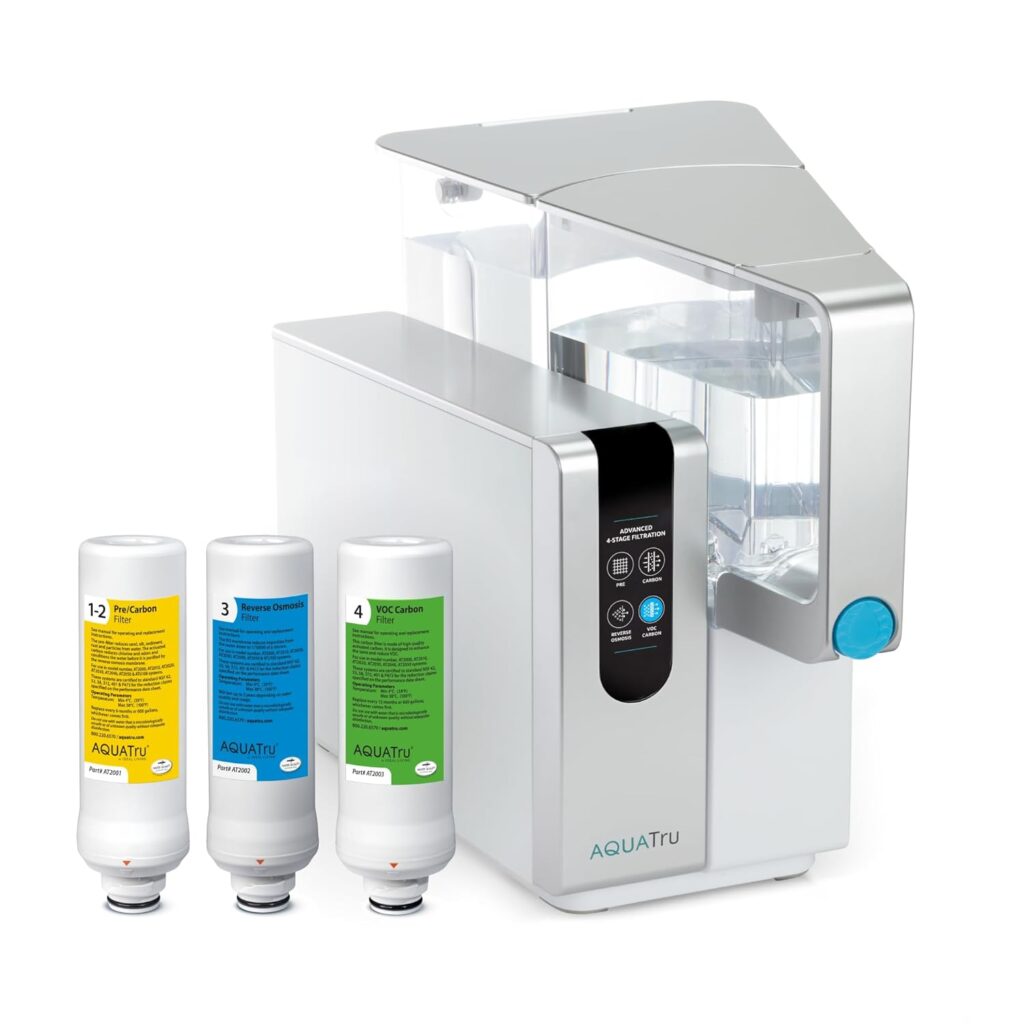
Every other system on this list requires you to drill a hole in your sink and connect to your plumbing. The AquaTru Classic Countertop Reverse Osmosis Water Filter System does not. You unbox it, fill the back tank with tap water, plug it in, and it starts producing purified water in minutes. That’s the entire installation process.
For renters, people in apartments, or anyone who simply doesn’t want to get under their sink with a wrench, this is the only serious RO option. And it’s serious — not a compromise.
The AquaTru Classic is certified by IAPMO to NSF/ANSI standards 41, 53, 58, 401, and P473 — five separate certifications, more than any other countertop RO system reviewed. In practice, it removes heavy metals including lead and arsenic, PFAS forever chemicals (PFOA, PFOS), chlorine, chloramines, fluoride, nitrates, and 84 contaminants total.
That NSF P473 certification is particularly important — it’s the standard specifically designed to verify PFAS removal. The AquaTru is one of the only systems in this comparison that holds it.
The 4-stage process (sediment pre-filter → carbon filter → RO membrane → VOC carbon post-filter) produces clean water into a 0.75-gallon clean water tank. You’ll refill the source tank once or twice a day with direct tap water, which takes about 30 seconds. It takes 10–15 minutes to filter a full batch — so this isn’t the right choice if you need instant high-volume flow.
Three years of ownership confirmed that lab-verified PFAS reduction to non-detectable levels, and as long as filters were swapped on schedule, performance never dipped.
The downside is honestly the price tag. It costs more than a standard reverse osmosis system despite requiring no plumbing and producing a smaller volume of water. The ongoing cost is ~$100/year, which is reasonable. And the countertop footprint is 14″ × 12″ — you need real estate on your counter for this to live.
The AquaTru Classic Countertop Reverse Osmosis Water Filter System is great for renters, apartment dwellers, or anyone who wants RO-quality filtration without any installation.
You can also check out other countertop reverse osmosis systems here.
Side-by-Side Comparison
| System | Type | GPD | Remineralization | NSF Certified | Waste Ratio | Annual Cost | Best For |
|---|---|---|---|---|---|---|---|
| iSpring RCC7AK | Under-sink | 75 | ✅ | NSF 58 | 1:3 | ~$65 | Best overall value |
| Waterdrop G3P800 | Under-sink tankless | 800 | ❌ (add-on) | NSF 42, 53, 58, 372 | 3:1 | ~$170 | Best modern system |
| APEC ROES-PH75 | Under-sink | 75 | ✅ | WQA/NSF 58 | 1:3 | ~$90 | Best budget alkaline |
| Home Master TMAFC-ERP | Under-sink | 75 | ✅ (2-pass) | NSF components | 1:1 | ~$99 | Best water efficiency |
| AquaTru Classic | Countertop | N/A | ❌ | NSF 41, 53, 58, 401, P473 | ~1:1.5 | ~$100 | Best for renters |
Which System Should You Buy?
Buy the iSpring RCC7AK if: You own your home, have a standard kitchen setup, and want excellent filtration with great-tasting water at the lowest reasonable price. This is the right answer for most people.
Buy the Waterdrop G3P800 if: You want the most modern, fastest tankless system and you’re not price-sensitive. The NSF 53 certification stack and UV sterilization make it the strongest performer if you have documented water quality concerns.
Buy the APEC ROES-PH75 if: You want the APEC build quality and alkaline water on a tighter budget. It’s slightly less certified than the iSpring but still WQA verified and very reliable.
Buy the Home Master TMAFC-ERP if: Water waste matters to you — whether for environmental or cost reasons — and you want the best-tasting water with the most efficient 1:1 waste ratio.
Buy the AquaTru Classic if: You rent, can’t modify your plumbing, or simply want plug-and-play RO without any installation. The 5-certification NSF stack is best-in-class for PFAS removal.
Before You Buy: Check Your Water Quality First
The single most useful thing you can do before spending money on any filtration system is look up your actual tap water quality. The EWG Tap Water Database lets you type in your zip code and see exactly what contaminants your utility has detected, at what levels, and how they compare to health guidelines. It takes two minutes and completely changes how you shop for a water filter.
If your report shows fluoride, lead, PFAS, or nitrates above health guidelines, an RO system is your best home solution. If your water is relatively clean and your concern is mainly taste, a quality pitcher filter may be sufficient.
Frequently Asked Questions
How long do reverse osmosis systems last?
The main unit typically lasts 10–15 years if properly maintained. The filters require replacement every 6–12 months depending on the stage. The RO membrane specifically lasts 2–3 years under normal conditions.
Do RO systems remove healthy minerals?
Yes — the RO membrane removes both harmful contaminants and beneficial minerals like calcium and magnesium. This is why remineralization matters. Systems like the iSpring RCC7AK, APEC ROES-PH75, and Home Master TMAFC-ERP add minerals back in. If you choose a system without remineralization (like the Waterdrop G3P800 base unit), you can add a $30 inline remineralization filter.
Does reverse osmosis remove PFAS?
Yes. RO is one of the EPA’s recommended technologies for PFAS reduction. Independent testing consistently shows RO systems removing 90–99% of PFAS compounds. The AquaTru Classic is the only system in this comparison with NSF P473 certification specifically for PFAS.
Can I install an RO system myself?
For under-sink systems like the iSpring and APEC, yes — most DIYers with basic tool comfort can complete installation in 1–2 hours following the included instructions and video guides. The AquaTru requires no installation at all.
How much does RO water cost per gallon?
After accounting for the purchase price and annual filter costs over 5 years, RO water typically costs $0.10–$0.30 per gallon, depending on the system. Bottled water runs $0.89–$3.00 per gallon. The payback period for most systems is under 18 months if you currently buy bottled water.
Last Updated: 27 April 2026