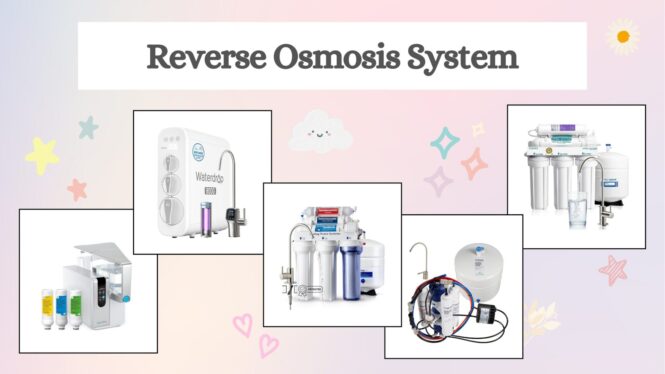
The first time I looked under my kitchen sink after installing a traditional tank-based RO system, I was genuinely surprised by how much space was gone. A bulky pressurized tank, a tangle of colour-coded tubes, five separate filter housings stacked in a row — it looked like plumbing from a different era. And in a way, it was. That was five years ago. Tankless RO systems have changed what’s possible under a kitchen sink, and the gap between the old design and the new one is significant enough that I wouldn’t buy a tank-based system for a small or medium household today.
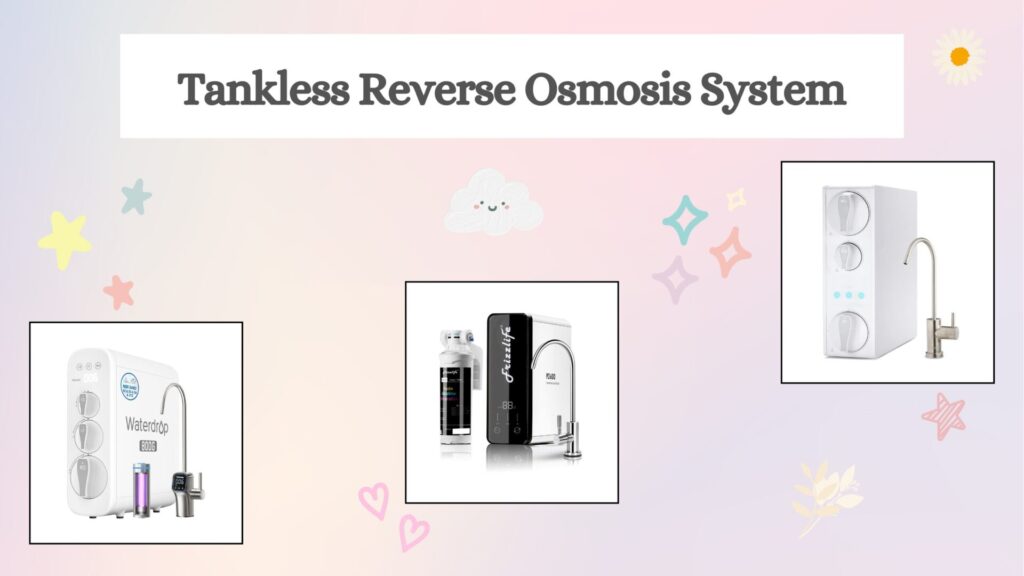
This article covers the three best tankless reverse osmosis systems right now that most households are using, and all are genuinely good. The differences between them are specific and meaningful — and which one is right for you comes down to what you prioritize.
If tankless reverse osmosis systems are not the best for your household, you can also check out our article on the best reverse osmosis system for other types of reverse osmosis systems.
What Is a Tankless RO System? (And Why It Matters)
Before jumping into the products, it’s worth explaining what “tankless” actually means — because the difference between tankless and traditional RO is bigger than most people realise.
A traditional RO system works like this: water slowly filters through the membrane (at 50–75 GPD, which is actually quite slow) and drips into a large pressurized storage tank under your sink. When you turn on the faucet, you’re drawing from that stored tank — not from live filtration. The tank typically holds 3–4 gallons and takes 1–2 hours to refill after heavy use.
A tankless RO system eliminates the storage tank entirely. Instead, a built-in electric pump pressurises water and forces it through the membrane on demand — in real time, as you run the faucet. The result is a much faster flow rate (500–800 GPD instead of 50–75 GPD), a dramatically smaller footprint (roughly 70% less under-sink space), and no stagnant water sitting in a pressurized bladder that can degrade over time.
The trade-off is that tankless systems require an electrical outlet under your sink to power the pump, and they cost more upfront than traditional tank systems. If your cabinet doesn’t have a power socket, you’ll need an electrician — factor in $75–$200 for that before deciding.
One Key Issue to Know About: TDS Creep
Every tankless system has one quirk worth knowing about before you buy: TDS creep. TDS stands for Total Dissolved Solids — essentially, a measure of everything dissolved in your water. After any period of non-use (overnight, while you’re at work), a small amount of unfiltered water can seep back into the membrane and sit there, raising the TDS of the very first water that comes out of the faucet.
The fix is simple: run the faucet for 3–5 seconds before filling your glass or cooking pot. Most people do this automatically after a few days. It’s a minor habit, not a flaw — but I want you to know about it because some reviews treat it as a dealbreaker, and it isn’t.
Summary
PRODUCT | DESCRIPTION | PRICE | |
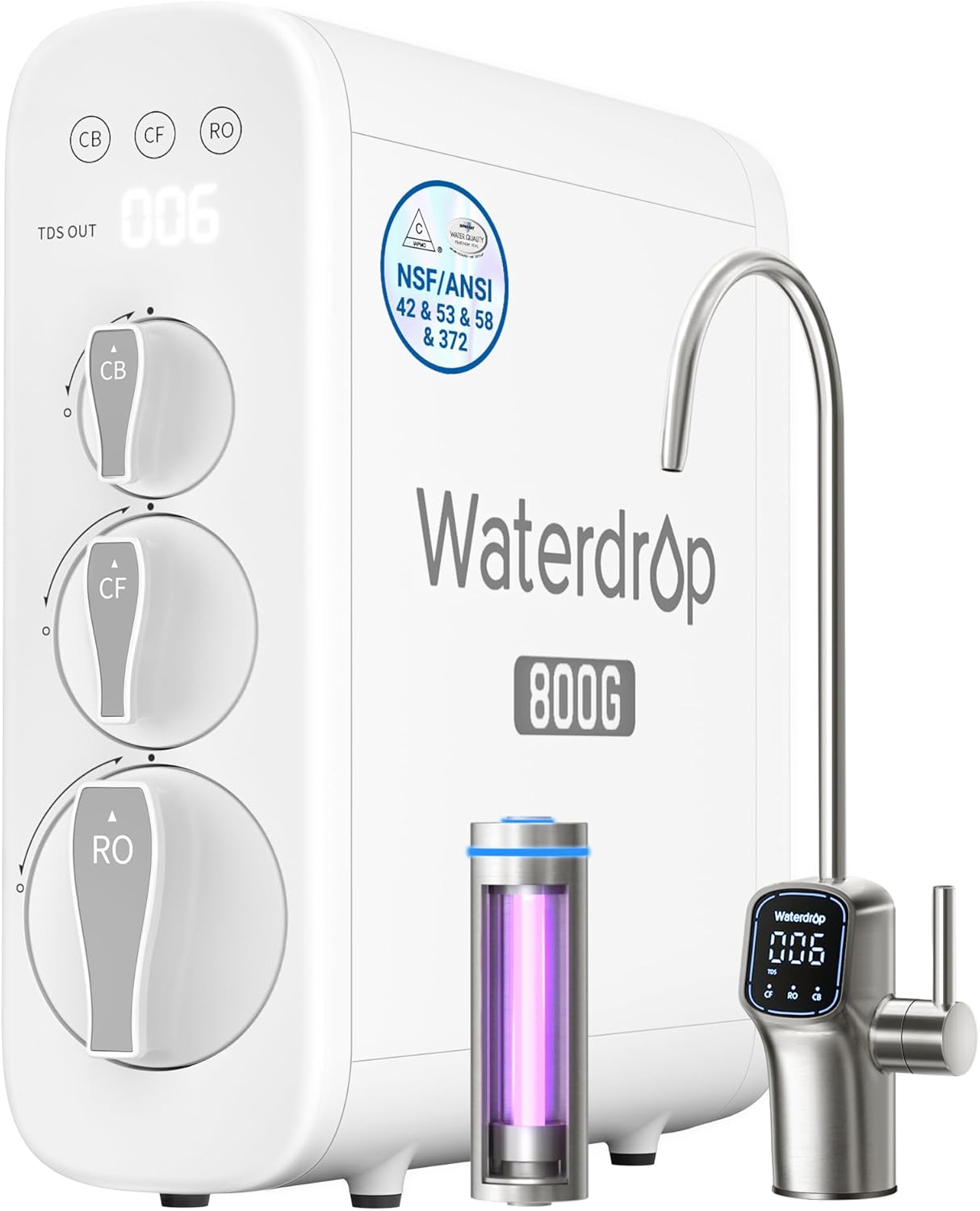
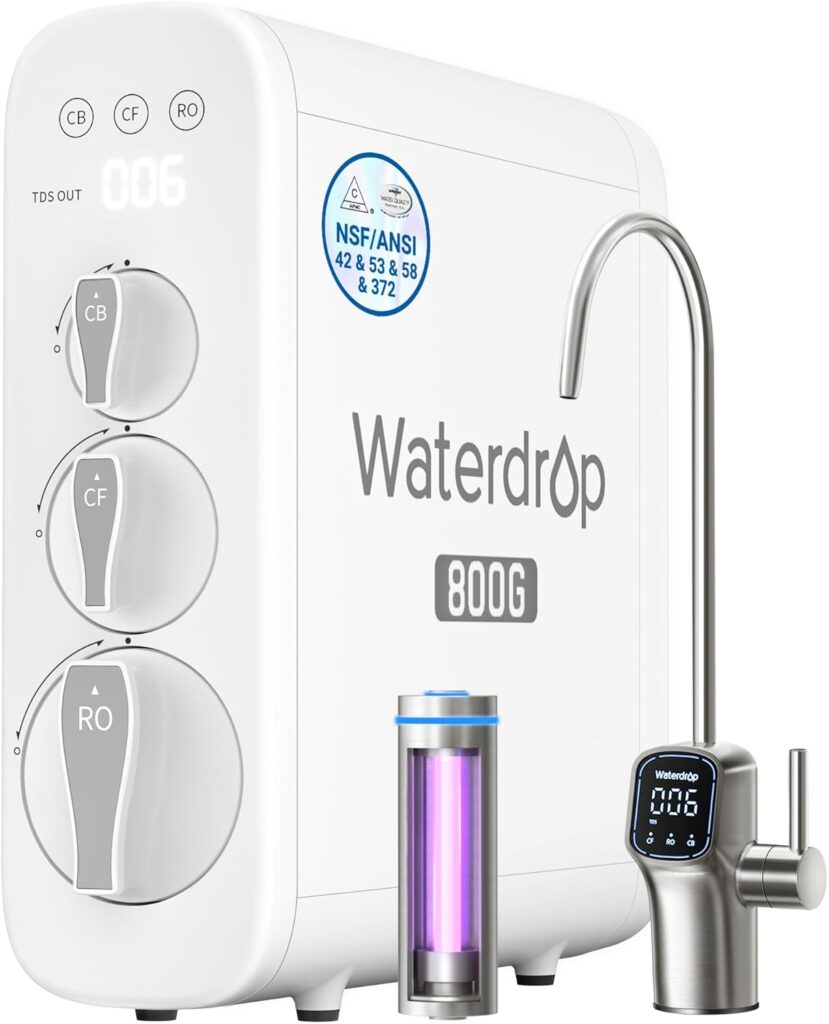
| Waterdrop G3P800 Reverse Osmosis System | Best for Maximum Flow Rate and Certification Coverage | ; |
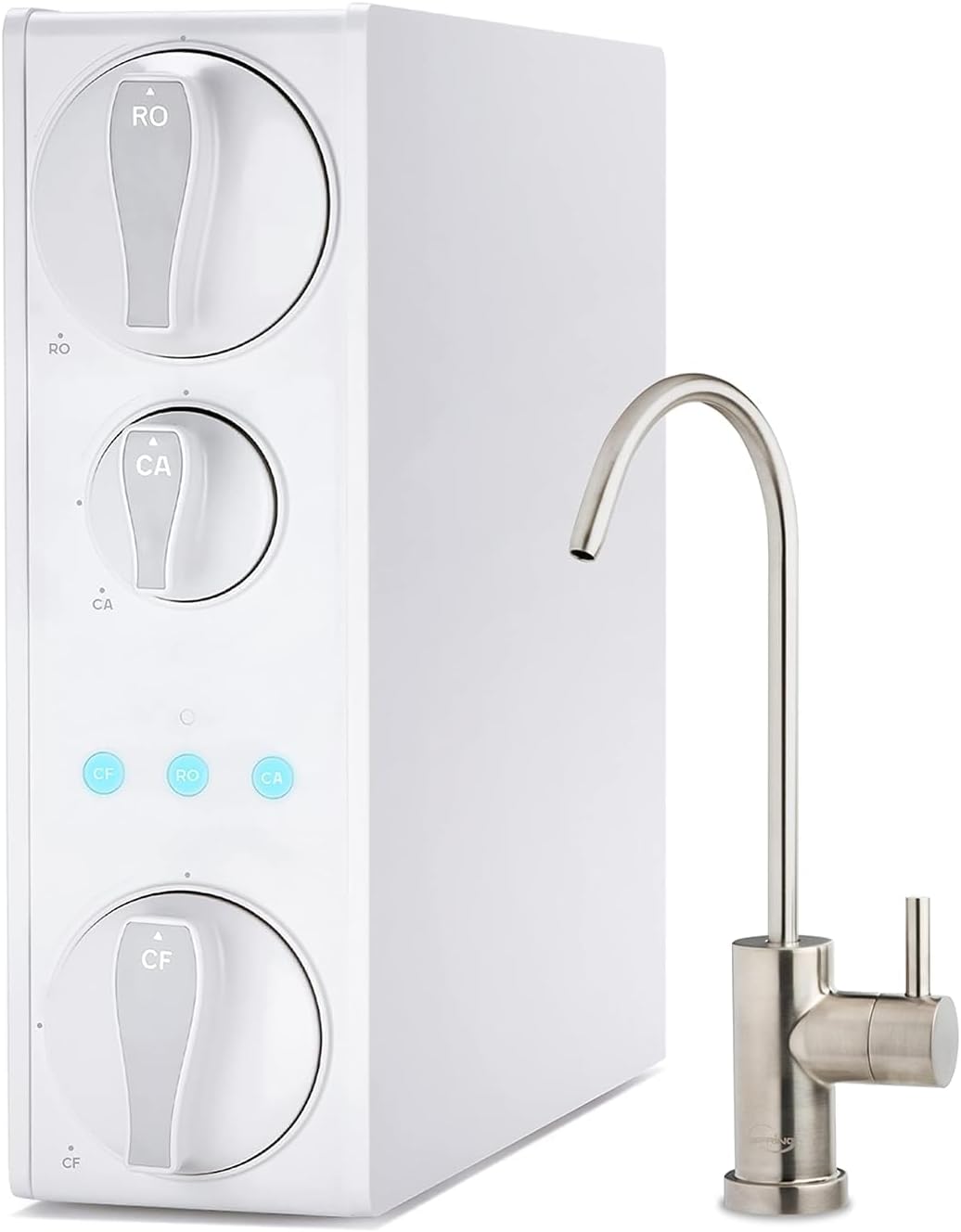
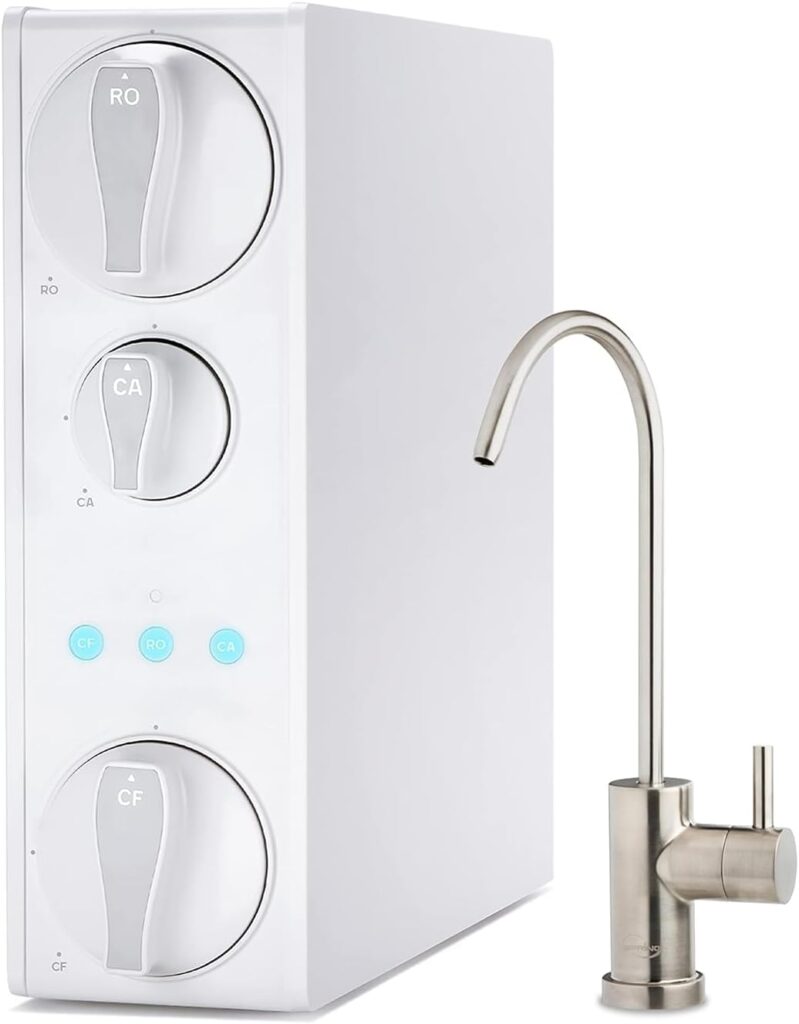
| iSpring RO500AK-BN Reverse Osmosis System | Best Overall Value for Most Homes | ; |
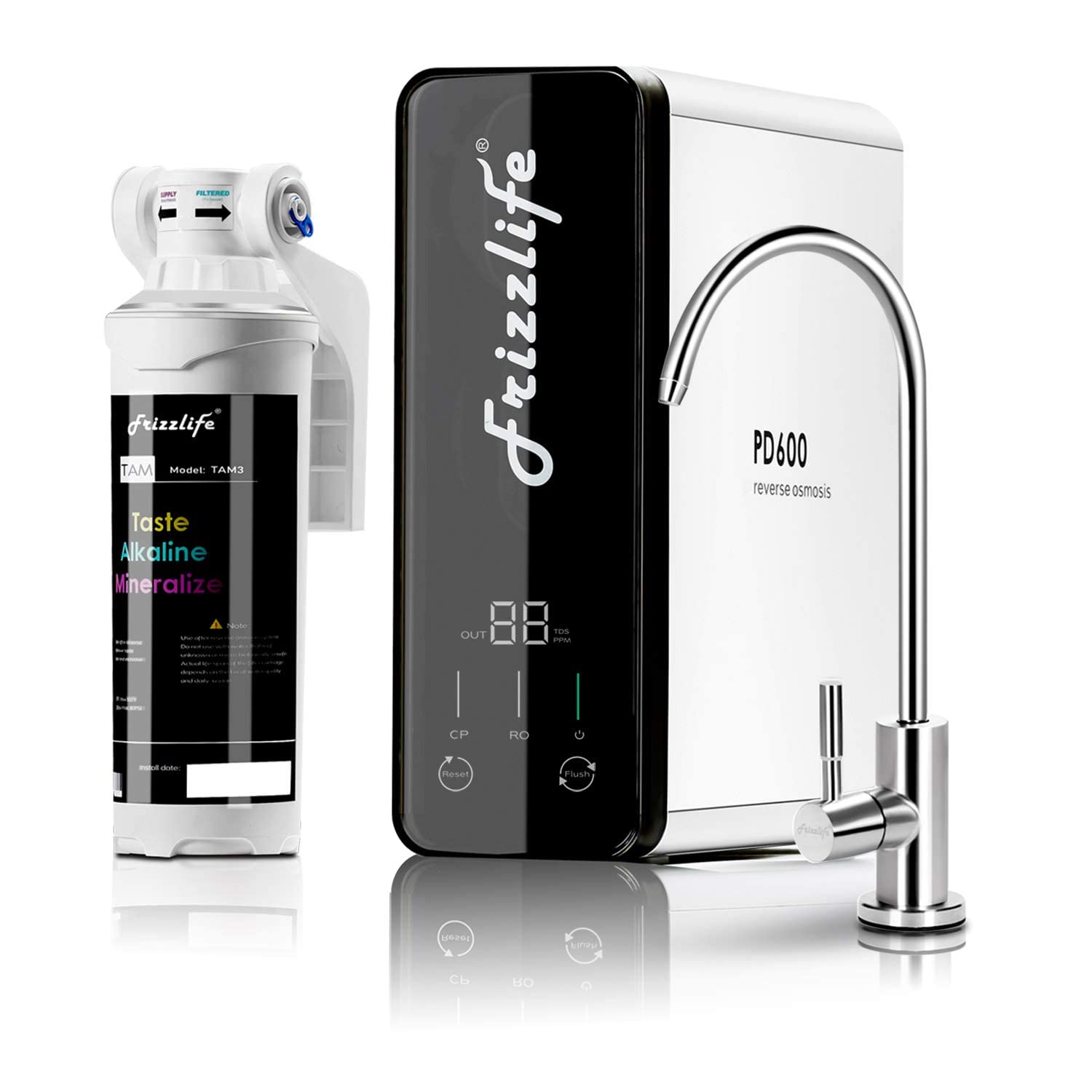
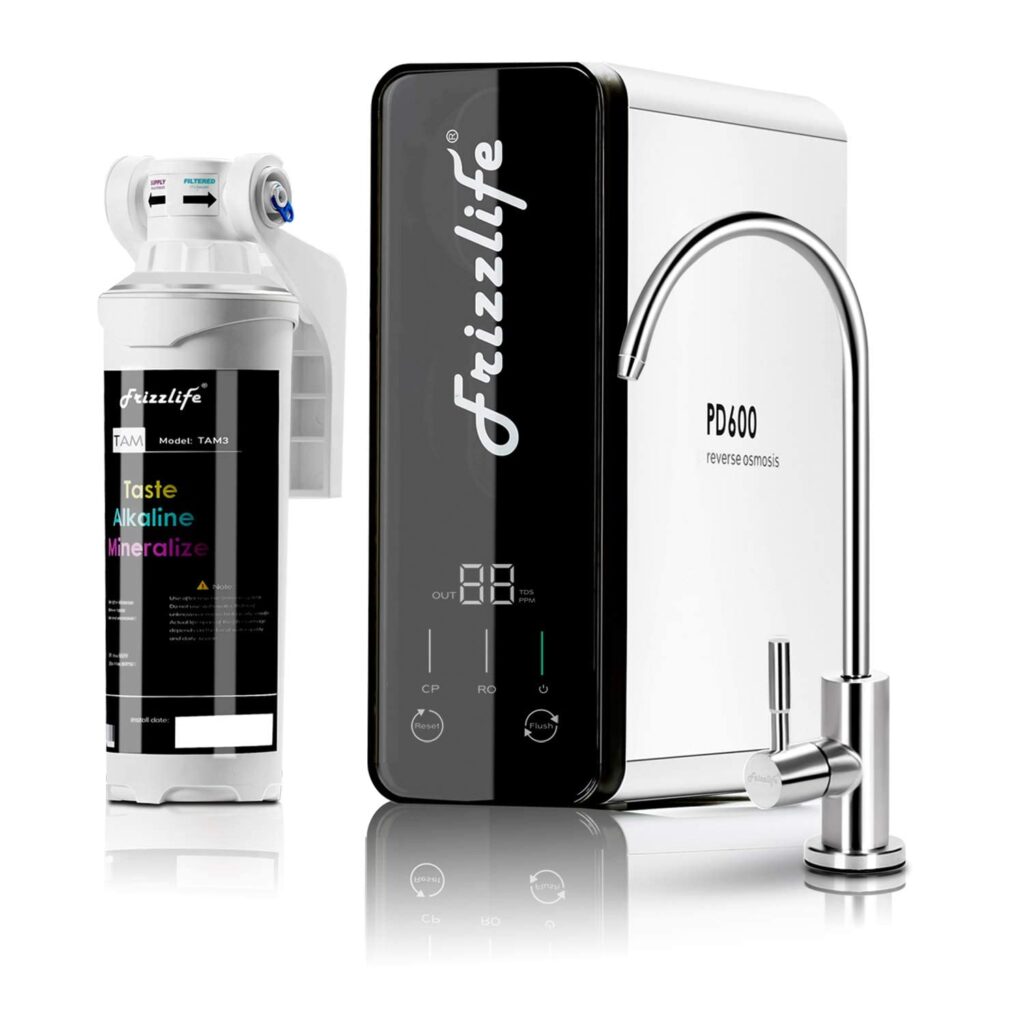
| Frizzlife PD600-TAM3 Reverse Osmosis System | Best for Water Taste and Coffee Brewing | ; |
The 3 Best Tankless Reverse Osmosis Systems
Waterdrop G3P800 Reverse Osmosis System — Best for Maximum Flow Rate and Certification Coverage
Key specs:
- GPD: 800
- Waste ratio: 3:1 pure-to-drain
- Certifications: NSF/ANSI 42, 53, 58, 372
- Remineralization: Optional add-on ($30)
- Annual filter cost: ~$170
- Requires electricity: Yes
The Waterdrop G3P800 Reverse Osmosis System is the benchmark every other tankless RO system gets compared against, and it earns that position. Its 800 GPD flow rate effectively eliminates the biggest historical complaint about RO systems — waiting around for water — and its compact footprint means you won’t sacrifice all of your under-sink storage.
To put Waterdrop 800 GPD in plain terms: it fills a standard 8 oz glass in about 5 seconds. For comparison, the traditional 75 GPD tank systems that most households had five years ago would take over a minute to produce the same amount of water without the stored tank. You’ll never notice a wait with the Waterdrop G3P800.
What makes it stand out is the NSF certification stack. The Waterdrop G3P800 holds NSF/ANSI 42, 53, 58, and 372 simultaneously — a combination almost no other residential under-sink RO system achieves. NSF 53 certification is the critical addition: it means independent laboratory testing has confirmed the system reduces specific health-effect contaminants including lead, cysts, and VOCs . Most systems only carry NSF 58, which covers general TDS (dissolved solids) reduction. NSF 53 goes further and verifies specific health-related contaminants have been independently tested and reduced. If you’ve checked your water quality report and found specific concerns — lead above action levels, PFAS, VOCs — the G3P800’s certification stack is the most comprehensive protection available in this format.
It also includes a UV sterilizing light built into the faucet unit. UV sterilisation works by exposing water to ultraviolet light as it flows through, which inactivates the DNA of bacteria and viruses so they can’t reproduce or cause illness. The G3P800 claims 99.9% sterilization — particularly relevant if you’re on well water or have any microbial concerns about your supply.
In lab testing, the G3P800 eliminated trihalomethanes and barium and cut salts by 85%, with performance staying consistent across multiple filter changes over 3+ years of use. The 3:1 pure-to-drain ratio means for every 3 cups of clean water you get, only 1 cup goes to waste — a major improvement over traditional systems that waste 3–4 cups for every cup produced.
However, it can be expensive. It is one of the most expensive tankless reverse osmosis system. It doesn’t include remineralization as standard, so the filtered water can taste slightly flat or acidic. Waterdrop sells an optional add-on for around $30, and I’d recommend ordering it at the same time rather than discovering you want it after the fact. The pump produces a noticeable hum during operation — not loud, but audible if your sink is adjacent to a quiet room.
The Waterdrop G3P800 Reverse Osmosis System is best for households with documented water quality concerns who want the most comprehensively certified, fastest-flow tankless system available.
iSpring RO500AK-BN Reverse Osmosis System — Best Overall Value for Most Homes
Key specs:
- GPD: 500
- Waste ratio: 2:1 pure-to-drain
- Certification: NSF/ANSI 58
- Remineralization: Built-in alkaline stage
- Annual filter cost: ~$100–$120
- Requires electricity: Yes
The iSpring RO500AK-BN Reverse Osmosis System is what I’d buy if I were setting up a kitchen from scratch today and didn’t have specific water quality concerns driving me to spend more. It does everything right at a price that’s significantly more reasonable than the Waterdrop G3P800 Reverse Osmosis System.
The iSpring RO500AK-BN is NSF 58 certified for TDS reduction, delivers up to 500 gallons of purified water per day with a flow rate of 0.4 GPM — enough to fill an 8 oz cup in just 10 seconds — and features an industry-leading 2:1 pure-to-waste ratio that reduces wastewater by up to 400% compared to traditional RO systems. In plain terms: 2 cups of clean water for every 1 cup wasted. Not as efficient as the Waterdrop’s 3:1, but dramatically better than any traditional tank system.
The detail that matters most is the built-in alkaline remineralization stage. When an RO system strips contaminants from your water, it also removes the calcium and magnesium that give water its natural taste — leaving water that’s very pure but slightly acidic and flat-tasting. The RO500AK-BN’s third stage passes filtered water through a carbon alkaline filter that restores beneficial minerals and raises pH back to a natural 7–7.5 range. With its 3-stage filtration process — a 2-in-1 composite sediment and carbon block filter, an advanced RO membrane, and a carbon alkaline filter made with quality coconut shell — the system removes up to 99% of over 1,000 contaminants including lead (up to 98%), chlorine, fluoride, arsenic, and PFAS, while restoring minerals for improved taste.
This is included as standard, not sold as an add-on. That’s meaningful — the Waterdrop G3P800 produces technically purer water, but without the remineralization add-on it tastes noticeably flatter. The iSpring produces water that tastes like natural spring water straight out of the box.
Users consistently report that it is a better alternative to previous water filters and praise the customer service specifically, with iSpring offering lifetime technical support from Atlanta, Georgia — US-based support you can actually reach. In a category where after-sales support can be the difference between a system that lasts 10 years and one that develops a leak at year 2, that matters.
Filter replacement is notably easy. No need to shut off the water supply. Filter changes are greatly simplified — lock, twist, done — and can be completed within seconds. The feed water adapter fits both 1/2 and 3/8 inch pipes, covering the two standard sizes found in US homes.
At 500 GPD, flow speed is slower than the Waterdrop G3P800’s 800 GPD — you’ll notice the difference filling large cooking pots. Some users on very hard water (above 300 ppm TDS) report faster-than-expected filter consumption. NSF 58 covers TDS reduction and is solid, but doesn’t include the NSF 53 health-effects certification that the G3P800 carries. If your water report shows documented elevated lead or VOCs, that certification gap matters.
The iSpring RO500AK-BN Reverse Osmosis System is best for most households who want excellent tankless RO performance with great-tasting alkaline water at a fair price and reliable US-based support.
Frizzlife PD600-TAM3 Reverse Osmosis System — Best for Water Taste and Coffee Brewing
Key specs:
- GPD: 600
- Waste ratio: 1.5:1 pure-to-drain
- Certification: Tested to NSF/ANSI 42, 53, 58 (not independently certified)
- Remineralization: Built-in TAM3 alkaline filter
- Annual filter cost: ~$100–$120
- Requires electricity: Yes
The Frizzlife PD600-TAM3 Reverse Osmosis System is the system I’d recommend to anyone who wants to nerd out about water quality — specifically, anyone who cares deeply about how their filtered water tastes, or who wants to use it for espresso and specialty coffee.
The PD600-TAM3 focuses specifically on delivering mineral-rich alkaline water — during testing, output consistently measured pH 7.5–8.0 with a smooth, rounded taste distinctly different from flat RO water. Users specifically purchase this system for espresso machines and coffee brewing, reporting improved flavor extraction and crema quality. The TAM3 alkaline remineralization filter — which stands for Triple Alkaline Mineral — is the standout feature. It restores potassium, calcium, and magnesium after the RO membrane has stripped them out, producing water with a mineral profile closer to premium bottled spring water than to standard RO output.
In independent flow rate testing at 60.9°F, the PD600-TAM3 averaged just over 639 GPD — faster than the manufacturer’s 600 GPD claim. An 8 oz cup filled in 9.8 seconds and a large pasta pot filled in 1 minute and 3 seconds. At 600 GPD, the flow speed is fast enough that you’ll never notice a wait in normal household use.
The 1.5:1 waste ratio is competitive and worth highlighting. For every 1.5 gallons of clean water produced, only 1 gallon is wasted. That makes it quite water-efficient than many other tankless reverse osmosis system.
The smart LED display monitors water quality in real time with a built-in TDS meter, with color-coded filter life indicators that remind you to change filters before performance drops — blinking red below 5% remaining, solid red and audible buzzer at 0%. I find that real-time TDS monitoring genuinely useful — it removes guesswork and tells you immediately if something has changed with your source water.
The Frizzlife PD600-TAM3 is tested to NSF/ANSI standards 42, 53, and 58, but it is not independently certified — meaning the testing was conducted according to NSF protocols but not verified by an NSF-accredited independent laboratory. For most city-water households, this distinction won’t matter in practice. But if you’re choosing a system specifically because of documented contamination concerns, the independently certified NSF marks on the iSpring and Waterdrop provide a stronger guarantee. The pump noise at ~55 dB is comparable to a quiet refrigerator hum — present but not intrusive. You also need to remember to run the faucet for a few seconds first thing in the morning to clear any TDS creep before filling your glass.
The Frizzlife PD600-TAM3 Reverse Osmosis System is best for households who prioritise water taste, coffee and espresso users, and anyone who wants the most mineral-rich alkaline RO water output.
Head-to-Head Comparison
The iSpring RO500AK-BN is the best tankless RO system for most homes — NSF certified, 500 GPD, built-in alkaline remineralization, quieter pump, and excellent US-based lifetime support at a strong mid-range price. The Waterdrop G3P800 is the best if you want maximum flow rate and the most comprehensive certification stack. The Frizzlife PD600-TAM3 wins if water taste is your primary concern — the built-in remineralization produces noticeably better-tasting water than most competitors.
| Waterdrop G3P800 | iSpring RO500AK-BN | Frizzlife PD600-TAM3 | |
|---|---|---|---|
| GPD | 800 | 500 | 600 |
| Cup fill time (8 oz) | ~5 sec | ~10 sec | ~10 sec |
| Waste ratio | 3:1 | 2:1 | 1.5:1 |
| NSF Certification | 42, 53, 58, 372 | 58 | Tested to 42, 53, 58 (not certified) |
| Remineralization | Optional add-on | ✅ Built-in | ✅ Built-in (TAM3) |
| UV sterilization | ✅ Built-in | ❌ | ❌ |
| Pump noise | Moderate hum | Whisper-quiet | Moderate hum (~55 dB) |
| Annual filter cost | ~$170 | ~$100–$120 | ~$100–$120 |
| Customer support | China-based | Lifetime, US-based | Email support |
| Best for | Certified performance + speed | Value + taste + support | Taste + efficiency + coffee |
The Real Difference Between 500, 600, and 800 GPD
GPD (gallons per day) is the amount of purified water a reverse osmosis system can produce in 24 hours, and most modern tankless systems run 400 to 800 GPD.
People often fixate on GPD as the headline spec to look out for in tankless reverse osmosis system, but in practice it matters less than it looks. Higher GPD ratings primarily affect flow speed rather than total daily capacity. An 800 GPD system fills a cup in 5 seconds, while a 400 GPD system takes 12 seconds. Both produce enough water for daily needs, but the higher GPD feels more convenient during heavy use.
For a household of 2–4 people, even 500 GPD is far more than you’ll ever use in a day. Where GPD matters is in the moment-to-moment experience: filling a large cooking pot, topping up a water bottle quickly before leaving the house, or running the system for an ice maker simultaneously. At 500–800 GPD, all three systems are fast enough that you’ll never feel constrained. The difference is felt most in large families or commercial settings.
Do You Need Remineralization?
This comes up in almost every conversation about RO water. The short answer: for drinking water, yes — it makes a real, noticeable difference.
Standard RO filtration strips both harmful contaminants and beneficial minerals from your water. The result is very pure but slightly acidic water (pH 5.5–6.5) that many people describe as flat or hollow-tasting. Remineralization adds calcium and magnesium back in — raising the pH to 7.5–8.0 and restoring the taste that most people associate with good water.
Of the three systems here, the iSpring and Frizzlife both include remineralization as standard. The Waterdrop does not — you’d need to add the $30 optional remineralization filter. I’d recommend doing so regardless if taste matters to you.
If you specifically want ultra-pure RO water without minerals — for certain aquarium applications, or if you’re using the water in specific brewing or chemistry contexts — the Waterdrop without the add-on is the right call. For everyday drinking and cooking, remineralization is the better default.
What to Check Before You Buy
Check your water pressure. Tankless RO systems require adequate incoming water pressure — typically 40–80 PSI — to perform at rated GPD. If your home runs below 40 PSI (common at the end of municipal supply lines or on some well systems), you may need a booster pump to reach rated flow. A $10–$15 pressure gauge from any hardware store tells you exactly where you stand.
Check for an under-sink outlet. All three systems require a standard 120V electrical outlet under the sink to power the pump. If yours doesn’t have one, factor in the electrician cost before buying.
Check your pipe diameter. The iSpring fits both 1/2″ and 3/8″ pipe connections. The Waterdrop and Frizzlife systems come with standard fittings that cover most US installations, but verify before ordering if you’re unsure.
Check your water report. The EWG Tap Water Database lets you look up exactly what’s in your tap water by zip code. If you find elevated lead, PFAS, or VOC levels, prioritise the Waterdrop G3P800’s NSF 53 certification. If your water is broadly clean and you’re primarily concerned with taste, chlorine, and general TDS reduction, the iSpring or Frizzlife handles that equally well at a lower price.
Frequently Asked Questions
How long does a tankless RO system last?
The main unit typically lasts 10+ years with proper maintenance. Pre-filters need replacing every 6–12 months. The RO membrane lasts 2–3 years under normal conditions. The alkaline remineralization cartridge on the iSpring and Frizzlife needs replacing every 12 months.
Can I connect a tankless RO system to my refrigerator ice maker?
Yes, with a caveat. Most tankless RO systems can connect to refrigerators and ice makers, though some require a small pressure tank ($30–$50) to handle the brief pause when the faucet first opens. The Waterdrop G3P800 and iSpring RO500AK-BN work particularly well with refrigerator connections.
Does a tankless RO system remove PFAS?
Yes. All three systems use RO membranes with 0.0001-micron pores — small enough to block PFAS molecules. The Waterdrop G3P800 carries the most rigorous independent certification for PFAS reduction. The iSpring is NSF 58 certified and independently tested for PFAS reduction rates of 96–99%. The Frizzlife is tested to NSF standards but not independently certified.
How often do I need to change filters?
For all three systems: pre-filters every 6–12 months, RO membrane every 2–3 years, remineralization/alkaline filter every 12 months. All three include filter life indicators that tell you when replacement is approaching — you don’t need to track it manually.
Is installation a DIY job?
Yes for all three. Expect 60–90 minutes for first-time installation with basic tools. The iSpring has the most comprehensive instruction materials including QR-linked video guides. All three systems come with all necessary fittings and tubing.
Last Updated: 28 April 2026